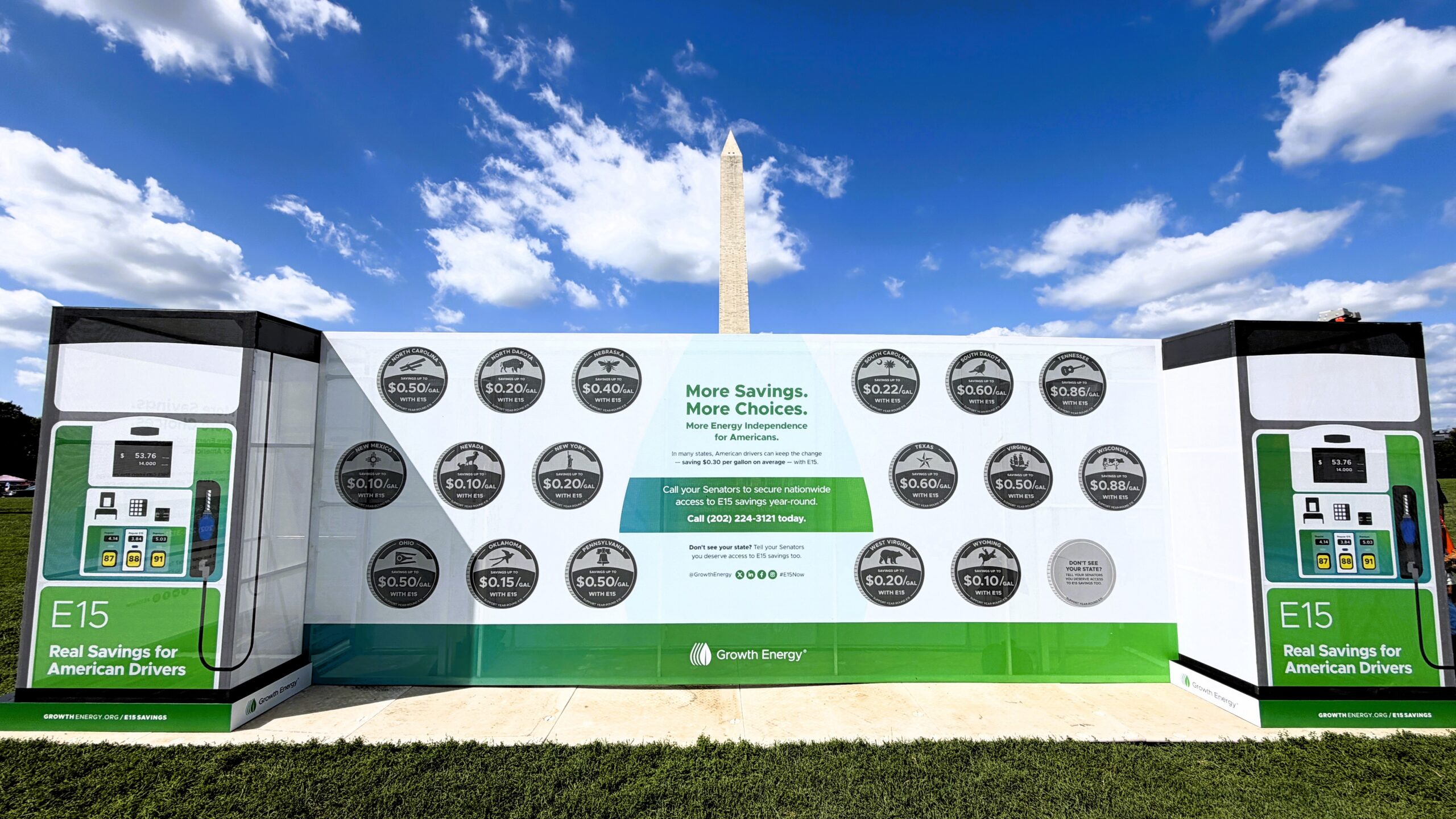
Launch includes grassroots outreach, advertising, and an installation on the National Mall that showcases E15 cost savings in the 35 states where the fuel is available
WASHINGTON, D.C.—Growth Energy, the nation’s largest biofuel trade association, relaunched its “E15 Now” campaign pressing for Senate action on a nationwide, permanent legislative fix to allow the year-round sale of E15, a higher ethanol fuel blend that costs $0.30 less per gallon on average than regular fuel and that can be used in 96% of all cars on the road today.
“Permanent year-round E15 can deliver proven relief at the pump at a time when Americans need it most,” said Growth Energy CEO Emily Skor. “Our new campaign will ensure leaders in the Beltway witness the real-world savings that year-round access could unlock for more families across the country. The House has already approved a fix, and the Senate must not miss this opportunity to give consumers greater access to a lower-cost fuel option.”
Highlights of the campaign include a new TV ad featuring a working mother of two who explains how E15 delivers “lower costs and a little more breathing room” for American families. The ad will appear in D.C. on digital and streaming platforms through the end of the month.
Growth Energy has also created an installation on the National Mall that invites consumers, tourists, and policymakers to learn how they can save money with E15. Visitors will find a 20-foot wall of coins—one for each of the 35 states where E15 is sold—that offers a snapshot of fuel savings drivers across the country can access by filling up with E15. Learn more at growthenergy.org/e15savings.
Advertising will be running on Capitol Hill during this week’s Growth Energy Biofuels Summit, the premier advocacy conference for the American ethanol industry. During the event, biofuel and farm voices from across the country will meet with hundreds of lawmakers and reinforce how this simple policy change could expand markets for American farmers and increase consumer access to a more affordable, cleaner-burning fuel option.