Equipment compatibility with E15 and higher blends of ethanol
- E15 is approved for 2001 and newer vehicles, or over 96% of the vehicles on the road today and account for more than 98% of the vehicle miles traveled
- Retailers have completed millions of E15 transactions with no reported fuel-related issues of any kind
- Consumers have driven more than 240 billion miles on E15
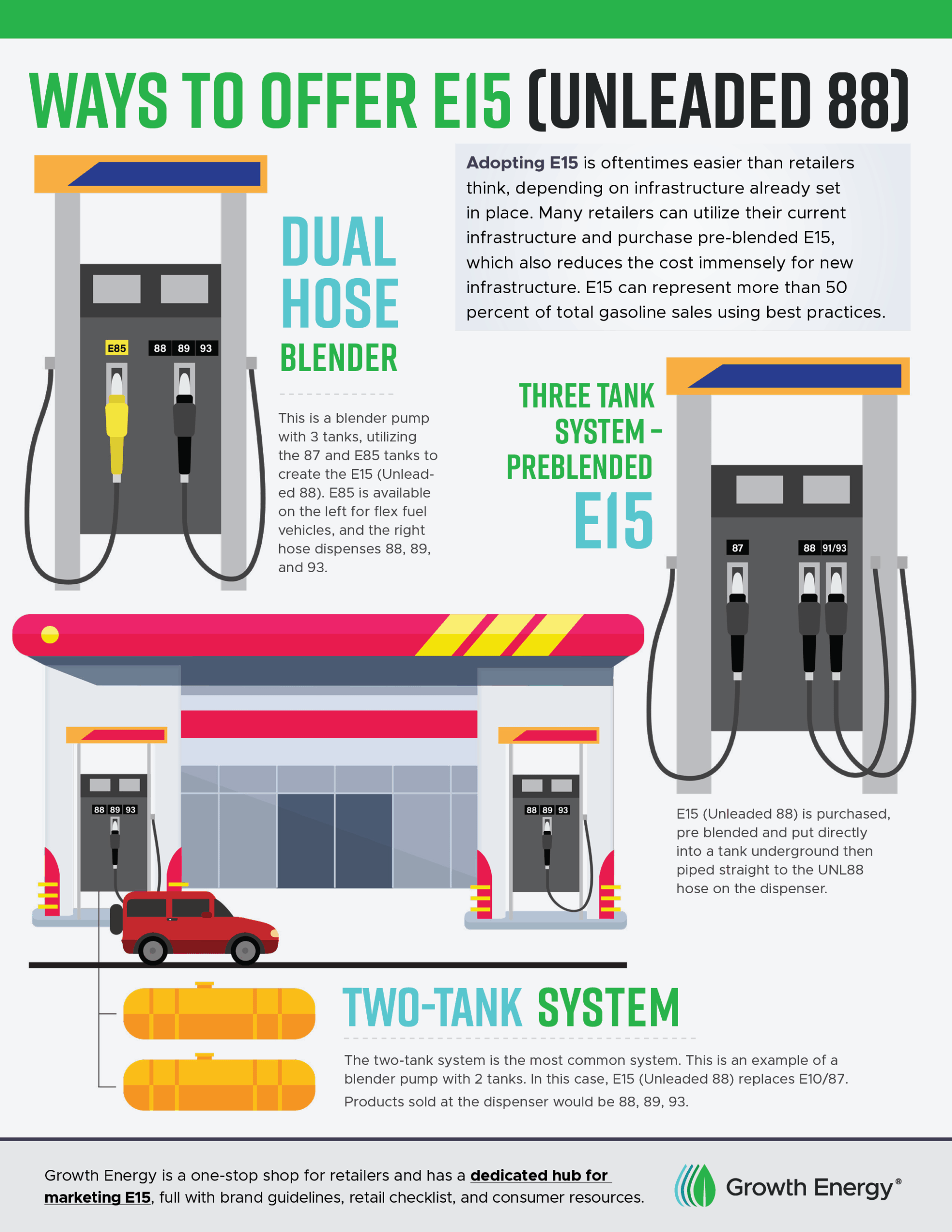
Growth Energy Market Development’s main priority is to grow the market domestically and globally. Our priority on the domestic market front is expanding the E15 marketplace and we work directly with retailers to provide them with expertise to navigate the regulatory landscape. Adopting E15 is oftentimes easier than retailers think, depending on infrastructure already set in place. Many retailers can use their current infrastructure and purchase pre-blended E15, which also reduces the cost immensely for new infrastructure. For a new site builds, retailers have the option to purchase blender pumps and blend E15 through the dispenser on site with E85 and 87.
Considering E15 in Your Product Lineup?
Our team is also always available to help walk you through the process or answer any questions.
- The Environment Protection Agency (EPA) accepts EITHER of the following to show equipment compatibility with E15:
- UL Listing
- Manufacturer’s Warranty:
- Dispensers
- Wayne Dispensers are all compatible up to E15. Any dispenser installed after 2014 is eligible for up to E25
- Gilbarco Dispensers since 2008 are compatible with E15 via manufacturer’s warranty
- Underground Storage Tanks
- All steel tanks are compatible with blends up to E100
- Doublewall fiberglass tanks installed since 1990 are compatible with blends up to E100
- Singlewall fiberglass tanks installed since 2005 are compatible with blends up to E100
- Pipe Thread is compatible with up to E20 blends
- Since around 1980, petroleum equipment manufacturers have offered compatible equipment for blends above 10% ethanol including: storage tanks, piping, valves, hanging hardware, dispensers, hoses, and nozzles, as the standard equipment for sale. For manufacturer letters about compatibility for ethanol blends above 10% visit the Petroleum Equipment Library here: PEI’s website.
A full compatibility list put together by the National Renewable Energy Laboratory can be found here